

SENASIC's Underlying Physical AI Technology Infrastructure and Self-Developed Platform
- 2026-08-06
- Events
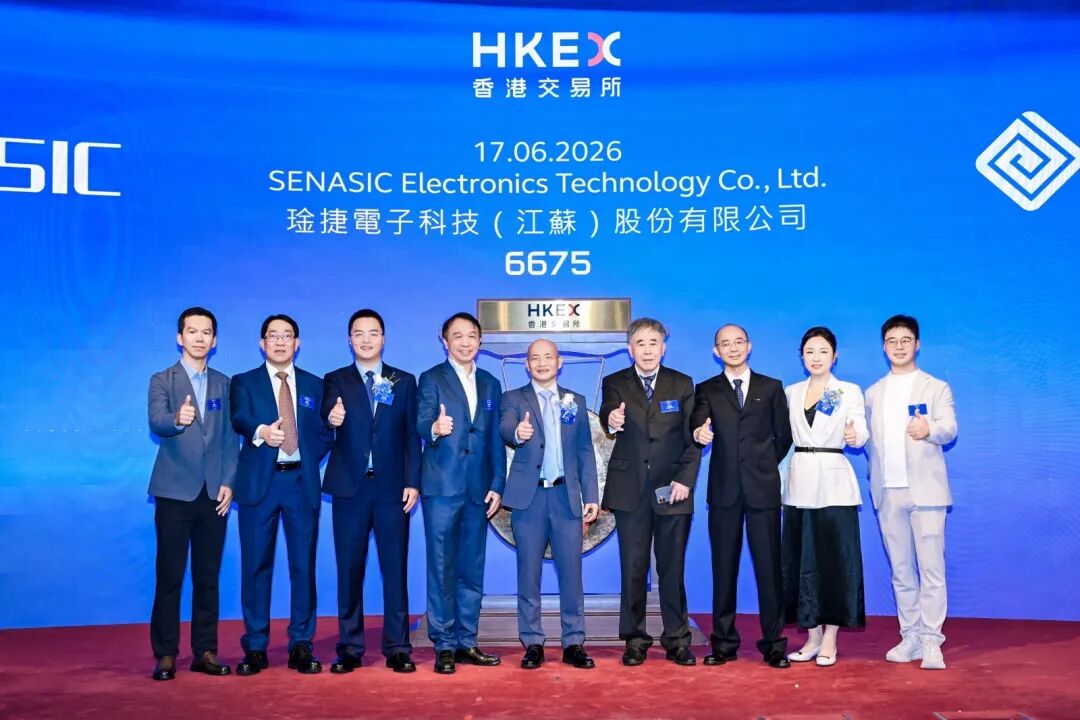
Recently, SENASIC (Stock Code: 6675.HK) was officially listed on the Hong Kong Stock Exchange, making it Hong Kong’s first listed company focused on the Physical AI edge sensing and computing chip track.

From Tires and Energy Storage to Breaking Into the Future Robotics Track
Three keywords define SENASIC: Edge-side, Intelligent, Wireless. From its inception, SENASIC targeted edge-side intelligent scenarios, with its application scenarios expanding from automotive tires to energy storage, and further extending to cutting-edge sectors like future robotics amid the AI boom. Whether smart cell chips, general intelligent sensing chips or smart tire chips, all product forms revolve around three core capabilities underpinned by a unified underlying technical methodology — the company’s core logic and a system built from day one.
SENASIC’s core moat lies in its self-developed underlying platform for Physical AI edge sensing and computing chips. Unlike cloud-based large models focused on text and image generation, SENASIC’s Physical AI technical system centers on sensor data acquisition + local edge computing + wireless transmission. It embeds miniature intelligent computing power into physical hardware to form an edge-side closed loop covering physical environment perception, real-time risk inference and autonomous equipment execution. Supported by this fully in-house developed unified platform, SENASIC has delivered two mass commercialized businesses: automotive TPMS and wireless BMS for energy storage. It has also made forward-looking layouts for perception chips for humanoid robots, forming three-tier growth curves. The company is a rare Chinese hardware infrastructure vendor boasting vehicle-grade mass production capability and cross-industry reusable technology for Physical AI.
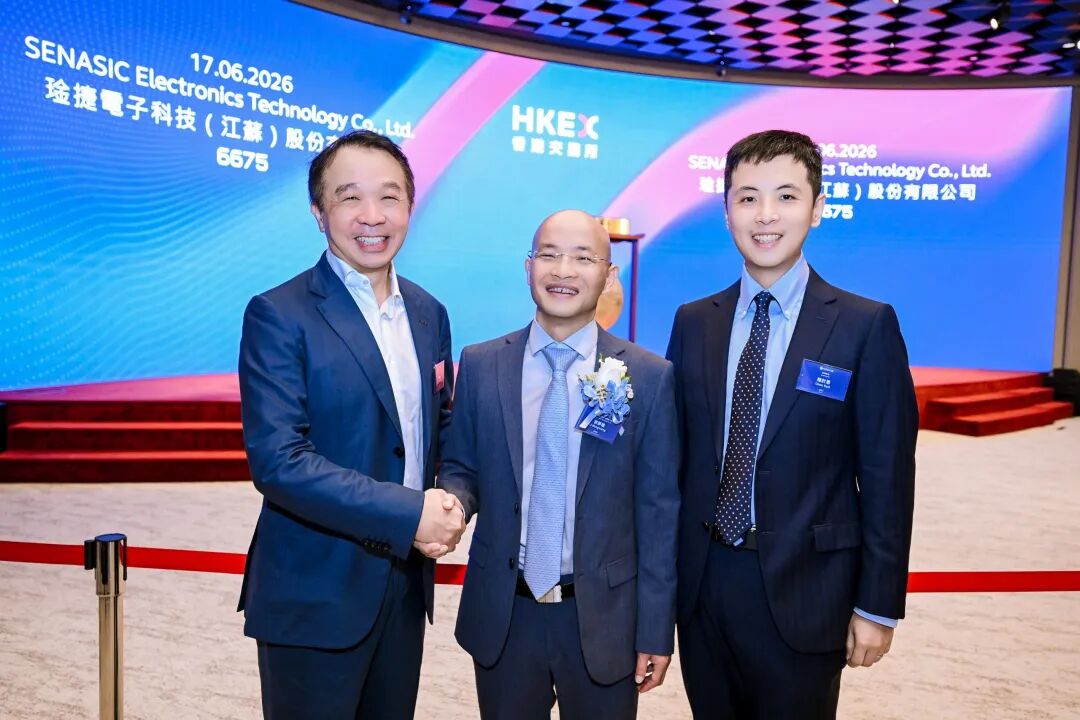 From left: Fu Jixun, Managing Partner of GGV Capital; Dr. Li Mengxiong, Founder & CEO of SENASIC; Chen Yusi, Partner of GGV Capital
When SENASIC first entered the smart tire market, it gradually recognized its core strength lies in capturing and processing physical-world signals.
Edge-side: Devices complete local data collection, processing and decision-making independent of the cloud to deliver ultra-low latency and high real-time performance;
Intelligent: Local computing and algorithm processing enable intelligent analysis based on raw data;
Wireless: Wireless modules transmit processed information externally.
This underlying platform enables SENASIC’s products to be reused across diverse scenarios. Tires, batteries and robots all interact with the physical world with differing signal types yet identical underlying logic. Empowered by this platform, originally passive components gain perception and feedback capabilities: they can self-monitor operational status, interpret environmental changes, transmit data externally and even participate in system decision-making.
Prior to 2018, SENASIC focused solely on smart tire chips. Riding the growth momentum of China’s automotive market, the company captured emerging demands from domestic automakers.
In the tire sector, clients required not only basic temperature and pressure data collection, but also high-bandwidth transmission via Bluetooth Low Energy (BLE) for data visualization on mobile terminals — a function unsupported by mainstream 433MHz communication solutions back then due to limited bandwidth and functionality.

First curve (mature & stable): Smart automotive tires;
Second curve (fastest-growing current business): Smart battery cells;
Third curve (ongoing layout): Robotics.
Essentially, SENASIC is a chip company built on edge-side intelligent platform capabilities instead of a vertical application-focused enterprise — a consistent corporate positioning since establishment.
 Enabling Perception for Battery Cells
SENASIC’s smart cell solution endows each individual battery cell with a unique identity tag and comprehensive data capabilities.
On one hand, the solution records fundamental cell information including production records and usage history. More crucially, it monitors real-time operating status: sampling and analyzing daily charge-discharge data to calculate State of Charge (SoC), State of Health (SoH) and degradation trends. Combined with historical datasets, the system can proactively forecast potential hazards such as internal structural degradation, cell puncture and thermal runaway. This technology transforms batteries from passive components into perceivable, self-judgment intelligent units.

Another transformative upgrade lies in data formatting. Conventional BMS only acquires fragmented, packetized data. SENASIC’s smart cell chips record continuous, full-lifecycle cell data starting from factory production, covering transportation, vehicle deployment, over 10 years of service life and even secondary use in energy storage systems. This revolutionizes battery management and lays the groundwork for safety governance, lifespan prediction and battery asset management.
SENASIC adheres to a core development principle: optimize total system cost rather than standalone chip cost. Traditional solutions adopt fewer chips but require costly wiring harnesses and structural parts. SENASIC’s solution deploys more low-unit-cost chips yet eliminates redundant harnesses and auxiliary components to deliver an overall lower system cost. During joint development with clients, SENASIC prioritizes tradeoff alignment under fixed cost constraints: balancing enhanced functionality, cost reduction and performance tuning to reach optimal system design.
Smart battery cells are transitioning from technical verification to large-scale commercialization, emerging as a core high-growth business for SENASIC.

Market vs. Product, Functional Departments vs. Project Teams
Leveraging its existing technology platform, SENASIC adopts a joint product definition cooperation model with clients, moving beyond the conventional "demand submission + product delivery" model to co-develop products alongside customers.
Clients often submit scenario-specific requirements for higher precision, miniaturization or flexible structural design, which cannot be directly implemented via chip design. Drawing on deep underlying technology accumulation, SENASIC collaborates with clients to evaluate feasible technical implementation paths, propose innovative alternative solutions and address unconsidered pain points for clients.
MRD (Market Requirements Document): Compiled by clients to outline scenarios, functional targets and cost constraints from an application perspective;
PRS (Product Requirement Specification): Internal document converting application-level demands into concrete chip implementation specifications.
Translating market requirements into technical specifications is a critical bridge between business demands and engineering delivery. Clients define application-level targets such as voltage and temperature monitoring for smart cells, ultra-low quiescent current to avoid cell capacity loss, and anti-interference & reliable communication under massive cell arrays — all framed around practical deployment rather than chip-level implementation details.
SENASIC’s system engineers and IC design engineers convert these demands into definitive chip product specifications, translating "client functional expectations" into actionable chip development plans covering architecture design, module partitioning and quantitative performance indicators.
This process covers coordinated hardware, software and system development with dynamic iteration to adapt to evolving client demands — particularly common for nascent products like smart cells with immature demand frameworks.
Nevertheless, SENASIC avoids endless requirement revisions that delay mass production. The firm sets a clear demand freeze timeline: all valid requirements are consolidated and finalized before the deadline to lock product specifications. New post-freeze requirements are reserved for next-generation product iteration.
In summary, joint product definition enables deep binding spanning application demand formulation, product specification design and engineering delivery. This model proves highly effective for immature industries such as robotics, facilitating forward-looking product innovation instead of incremental optimization based on outdated paradigms.
A tangible case: Traditional smart tire solutions only trigger alerts for abnormal tire pressure and temperature. Current clients demand proactive blowout risk prediction. While marginal value for human-driven vehicles (due to limited human reaction speed), this capability delivers decisive advantages for autonomous driving systems.

SENASIC’s on-chip solution conducts microsecond-level high-frequency pressure sampling, multiple rounds of verification and algorithm judgment within milliseconds to predict tire blowout risks dozens of milliseconds in advance, transmitting alerts to vehicle control units for stability adjustment and active braking to realize tangible safety value.
Although clients clarify target functional goals, they lack clear definitions for chip-level implementation including architecture selection, sampling frequency configuration and algorithm deployment. Under joint definition, SENASIC and clients engage in collaborative exploration: clients propose system-level application goals, while SENASIC decomposes challenges via chip architecture, circuit design and underlying algorithm development. Iterative communication transforms conceptual ideas into mass-producible product solutions.
Fundamentally, such innovation stems from joint decomposition of demands, system architecture and chip design across corporate and disciplinary boundaries. Cross-company, interdisciplinary collaboration serves as a core driver for new technology commercialization.
To support accelerated business expansion, SENASIC executed a pivotal organizational upgrade: shifting from a function-centered structure to a product line-centric framework.
The previous functional structure featured siloed departments for R&D, marketing, finance and operations, limiting cross-department collaboration efficiency amid growing business complexity. The product line organizational model adapts better to multi-business expansion for faster response and operational agility.
Post-restructuring, independent product lines are established for smart tires, smart battery cells and emerging new businesses. A shared middle office retains centralized functional support for R&D, marketing, operations and human resources. The core restructuring move delegates operational autonomy to individual product lines: each product line independently manages budgeting, profit & loss accounting and staffing configuration to operate as a standalone business unit. This mechanism boosts business agility and team accountability alongside incentive alignment.
Corresponding KPI adjustments are rolled out for performance appraisal: R&D teams are evaluated not only on technical deliverables but also consolidated corporate performance and product line commercial results (split between corporate overall targets and standalone product quality & revenue metrics). This shifts team mindsets from "functional deliverable completion" to "market-oriented commercial success".
The restructuring upgrades internal competency frameworks: former technical or functional leads (e.g., system design, IC design leads) evolve into operationally focused leaders with dual expertise in technology and commercial performance accountability. These product line leaders form the core talent reserve for the company’s senior management team to support long-term strategic development.

Closing Remarks: Gaining Industry Visibility
Market participants often overestimate short-term (2–3 year) technological disruption yet underestimate long-term (10-year) transformative impact. SENASIC balances strategic rhythm: capitalizing on fast-growing mature businesses such as smart battery cells while sustaining targeted investment in emerging tracks including energy storage and robotics without overemphasizing short-term returns. The company orchestrates phased growth relay across business segments to secure near-term revenue support and long-term growth upside post-listing.
A more pivotal strategic objective is to showcase China’s genuine hard technology capabilities in chips and semiconductors to global institutional investors and industrial players via its Hong Kong IPO. Unlike consumer internet firms with intuitive business logic, B2B chip enterprises face barriers to industrial and capital market recognition. SENASIC hopes to drive broader attention for the entire semiconductor industry starting from its own corporate visibility.